Celebrating 26 YEARS of Keeping You Safe and Warm

Wood Stove Tax Credit

Bookmark and Share

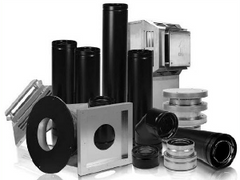
Buy a New Efficient Wood Stove and recieve a 30% Tax Credit up to $1500 on Qualifying Models, Chimney, and Installation!!

Example 1: a $2000 Stove Saves You $600, so You get a $2000 New Effecient Heater For $1400!!                Example 2: a $3000 Stove and $330 Chimney Saves You $999, so You Get a $3300 Stove and Chimney System For $2331!!

On Top of the Fedral Tax Credit, OUR STOVES ARE ON SALE!! CALL FOR SPECIAL SALE PRICING, toll free 1-877-265-8618

Click Here to view Qualifying HearthStone Models!!

Tax Credit FAQs

Q:  What is a federal consumer tax credit?

A:  Consumers claim the credit on their federal income tax form at the end of the year. This new credit reduces the amount of tax you owe.  The new credit is a reduction of total income tax at the bottom of your return, up to $1500.  This tax credit is a non-refundable tax credit available for individuals who pay taxes and who make energy-conscious purchases to improve the energy efficiency of their home.

Note: With regard to tax credits vs. tax deductions, in general, a tax credit is more valuable than a similar tax deduction. A tax credit reduces the tax you pay, dollar-for-dollar. Tax deductions - such as those for home mortgages and charitable giving - lower your taxable income.

Q:  When does this tax credit go into effect and how long will it last?

A:  The tax credit went into effect January 1, 2009 and is valid only for the purchase of a qualifying biomass stove during 2009 and 2010.  The maximum tax credit for the two-year period is $1500.  The sales receipt must indicate that the purchase was made between January 1, 2009 and December 31, 2010.

Q: Who determined the tax credit guidelines for the qualifying units?

A:  The Department of the Treasury, and specifically, the IRS.

In accordance with the American Recovery and Reinvestment Act of 2009, Part III, Section 1121, Energy  Conservation Incentives, non-businesses may qualify for this credit if the wood or pellet stoves meet the criteria of 75% or better efficiency as measured using a  lower heating value (LHV). The formula to calculate LHV is further defined by the Canadian Standards Association CSA B415.1. This calculation is subject to change until ratified by the IRS. Should said calculation be modified in the approval process, manufacturer takes no responsibility for qualification of product or guarantee of credit. Valid for qualifying purchases January 1, 2009 December 31, 2010.
*Go to www.recovery.gov for details.  Ask your tax adviser how this credit may apply for you.

2009 Boom in Residential Solar 

We expect there will be a surge in demand, putting further pressure on module supplies. Wood Heat is currently taking orders and reserving supply for first quarter 2009 delivery. By placing your orders now, you can schedule customers wanting to take advantage of the new tax credit law. We recommend you place your orders now to be able to meet your construction requirements for the beginning of next year.

UPDATE!

2009 Tax Credit Information - Important Details

Signed into law on October 3, 2008, a $300 consumer tax credit for the purchase of a 75% efficient biomass stove in 2009 was included in the Emergency Economic Stabilization Act of 2008.  The Hearth, Patio & Barbecue Association (HPBA) and the Pellet Fuels Institute (PFI), succeeded in including the tax credit to help consumers fight rising home heating costs.  Pertinent language in the legislation reads as follows:

SEC. 302. CREDIT FOR NONBUSINESS ENERGY PROPERTY
" "from January 1, 2009 to December 31, 2009"
" "a stove which uses the burning of biomass fuel to heat a dwelling unit located in the United States and used as a residence by the taxpayer, or to heat water for use in such a dwelling unit, and which has a thermal efficiency rating of at least 75 percent."
" "BIOMASS FUEL- The term 'biomass fuel' means any plant-derived fuel available on a renewable or recurring basis, including agricultural crops and trees, wood and wood waste and residues (including wood pellets), plants (including aquatic plants), grasses, residues, and fibers."

Guidelines for this tax credit are being determined by the U.S. Department of the Treasury and the Internal Revenue Service (IRS).  Although the tax credit takes effect January 1, 2009, the guidelines for the credit should be issued later in January. HPBA will keep the industry informed on the progress and details of this tax credit.  For the latest information, check the HPBA website, www.hpba.org, for critical developments.

Tax Credit FAQs


Q:  What is a federal consumer tax credit?

A:  Consumers claim the credit on their federal income tax form at the end of the year. This new credit reduces the amount of tax you owe.  The new credit is a reduction of total income tax at the bottom of your return, up to $1500.  This tax credit is a non-refundable tax credit available for individuals who pay taxes and who make energy-conscious purchases to improve the energy efficiency of their home.

Note: With regard to tax credits vs. tax deductions, in general, a tax credit is more valuable than a similar tax deduction. A tax credit reduces the tax you pay, dollar-for-dollar. Tax deductions - such as those for home mortgages and charitable giving - lower your taxable income.

Q:  When does this tax credit go into effect and how long will it last?

A:  The tax credit went into effect January 1, 2009 and is valid only for the purchase of a qualifying biomass stove during 2009 and 2010.  The maximum tax credit for the two-year period is $1500.  The sales receipt must indicate that the purchase was made between January 1, 2009 and December 31, 2010.

Q: Who determined the tax credit guidelines for the qualifying units?

A:  The Department of the Treasury, and specifically, the IRS.

Q:  Will other wood and solid-fuel appliances (like inserts, EPA-certified wood-burning fireplaces and hydronic heaters) qualify for the tax credit?

A:   The IRS did not state that inserts are covered, or are not covered.  However, based on EPA's practice of treating inserts and freestanding biomass stoves in a similar fashion, manufacturers may choose to include inserts.  At this time (June 2009) it is not clear whether EPA-certified wood-burning fireplaces or hydronic heaters will qualify.

Q:  Do all pellet stoves qualify for the tax credit?

A:   Any pellet stove that meets the 75% efficiency rating and has the qualifying documentation does qualify for the tax credit.

Q:  Are the installation costs, both labor and venting (chimney), covered?

A:  Installation is covered as long as it is a required for proper and safe operation of the stove.  The IRS is silent on the possible need to replace a chimney when upgrading an existing biomass stove; however, the EPA has a section on its website titled, Installation Affects Efficiency, which retailers and consumers should consult when deciding if a chimney replacement is warranted when installing a biomass stove.

Q. Are biomass stoves installed in new homes, or vacation homes, covered by this tax credit?

A. No. The IRS specifies that this credit applies only to existing principal residences, thus new homes and vacation homes would not qualify, nor would homes owned as rental units.

Q. If a consumer purchases other products, such as solar collectors or window upgrades; does this mean a biomass stove tax credit can't be taken?

A.  The tax credit is an aggregate, meaning the 2-year $1500 total credit can be used for items other than biomass stoves, such as windows and doors, HVAC and non-solar water heater upgrades, and roof upgrades, all of which are in the same tax credit category as biomass stoves.  The tax credit for all of these upgrades is capped at $1500 for the two year period. For example, if a taxpayer uses the entire $1500 for a product in 2009, then they cannot use it in 2010 for any other product in that same tax credit category.

Q: Are prior purchases covered?

A: Prior purchases made between January 1, 2009, and June 1, 2009 are covered if the manufacturer offers a certification statement for the product.

Q: Do stoves that are not newly tested for efficiency qualify under the tax credit?

A:   If a manufacturer has documentation that a stove has already achieved the required efficiency rating and issues a certification statement for the product, no further testing is required.

Q:  Why was 75% efficiency selected?

A:  The 75% efficiency was designated by the U.S. Congress in 2005 as part of the Energy Policy Act and was used again for this tax credit.

Q:  How is the 75% efficiency requirement determined?

A:  The manufacturer of the stove must provide certification that the product tests for at least a 75% efficiency rating using the lower heating value, i.e., the heat value of a combustion process assuming that none of the water vapor resulting from the process is condensed out, so that its latent heat is not available. 

Q:  What must a manufacturer provide to a consumer to prove that a product is certified?

A:  The manufacturer must certify that its product meets or exceeds the IRS efficiency requirement.  To do so, the manufacturer of a stove that qualifies for the tax credit may certify to a taxpayer that the component is a "qualified energy property" by providing the taxpayer with a manufacturer's certification statement that satisfies the requirements of sections 6.04, 6.05 and 6.06 of the IRS Guidance found at http://www.irs.gov/pub/irs-drop/n-09-53.pdf. The certification statement may be provided by including a written copy of the statement with the packaging of the component or property, in printable form on the manufacturer's website, or in any other manner that will permit the taxpayer to retain the certification statement for tax recordkeeping purposes.

Q:  What information should be included in a manufacturer's certification statement?

A:  A manufacturer's certification statement must contain the following information:

       (1) The name and address of the manufacturer.

       (2) Identification of the class of qualified energy property (Biomass-Burning Stove) in which the property is included.

       (3) The make, model number, and any other appropriate identifiers of the stove.

       (4) A statement that the component is an eligible qualified energy property.

       (5) A manufacturer's certification statement must contain a declaration, signed by a person currently authorized to bind the manufacturer in these matters, in the following form:  "Under penalties of perjury, I declare that I have examined this certification statement, and to the best of my knowledge and belief, the facts are true, correct, and complete."

Q:  What should a retailer provide and the customer retain for tax purposes?

 A:  Retailers and consumers must keep exact records of any sale or purchase.  Retailers should provide a consumer with the manufacturer's certification statement for the specific product model purchased.  A consumer may rely on a manufacturer's certification statement that their products are qualified energy property.  A taxpayer is not required to attach the certification statement to the return on which the credit is claimed. A consumer claiming a credit for qualified energy property should retain the certification statement as part of the taxpayer's records.  Manufacturers should make this certification document available to consumers on the web, in the product packaging, or in some other easily accessible manner.

Q:  Does the stove need to be manufactured in the U.S. to qualify for the credit?

A:  No; there is no "Buy America" component to this tax credit. 

The IRS Guidance can be found at http://www.irs.gov/pub/irs-drop/n-09-53.pdf.

HPBA will update this website with any new details about the tax credit.

Last updated June 12, 2009.